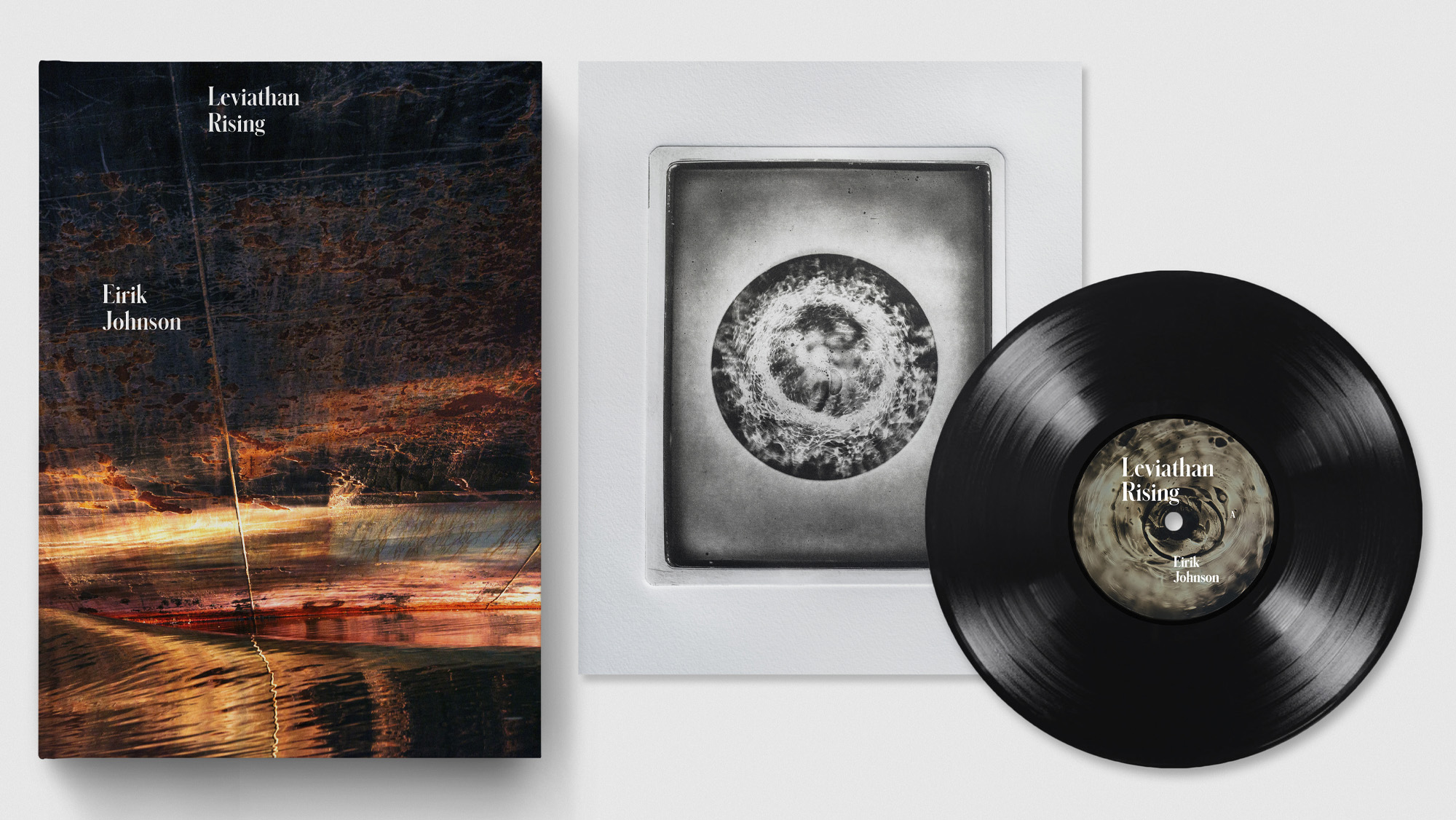
Alone in a small sea kayak, photographer Eirik Johnson floats along Washington State’s Duwamish River beneath the massive hulls of transoceanic barges, making photographs from these surreal spaces. The vessels that travel along the Inside Passage carrying goods to and from Alaskan waters to ports along the Pacific Rim often port in the Duwamish, a deeply polluted river ecosystem that flows into the Salish Sea. The photographs in Leviathan Rising capture the patinated exteriors of these beastly structures and transform scale, perspective, and light. Angular steel ribs jut out from the sterns and bows overhead, while sunlight radiates geometric patterns across their oil-slicked and rusted skins. Towering fins slice up from the water’s edge. Hidden portals uncover layers of salt and sunbaked runoff, vestiges of repeated oceanic journeys. Each layer of sediment, diesel, tar, and marine life that collects on the hulls is a marker of their voyages and of the broader system of oceanic trade.
Leviathan Rising also contains a series of unique daguerreotype photograms, created in collaboration with Daniel Carrillo, depicting glass floats used by early-twentieth-century Japanese fishermen to suspend their nets in the Pacific Ocean. If the floats broke free from their netting, the ocean’s currents conveyed the spheres east, ultimately reaching the shores of the Pacific Northwest. The reflective surface of these silver plates contains the frozen imprint of each float’s journey across the Pacific.
Sylvia Wolf, director emerita of the Henry Art Gallery, University of Washington, contributes an essay on a site-specific installation of this body of work, and LA-based musician and writer Sam Hockley-Smith addresses the sound component of the exhibited work, composed of aquatic field recordings that Johnson made beneath the surface of the Duwamish. Leviathan Rising’s arresting images of the daunting structures that carry commercial cargo across global waters and these thought-provoking texts compellingly address oceanic commerce and environmental fragility in our uncertain era.